
Each year, through ML Giving, we donate our time to organisations doing work we believe in, either pro bono or at reduced fees.
In 2026, we worked with two organisations tackling two different but equally important issues:
Macedon & Mount Macedon Community House: Shaping and testing a five-year strategic plan with stakeholders and considering what this small, volunteer-led organisation should focus on and achieve. Read more.
University of Canberra: In partnership with the Centre for Deliberative Democracy, designing and facilitating a deliberative process that considered how the university can become a place where everyone feels they belong, can express who they are, and connect safely across difference. Read more.
To our two excellent and deserving partners, thank you for bringing us into your worlds and trusting us with conversations that matter to you and your communities.
And, if you’re looking for somewhere to give this Christmas, Macedon & Mount Macedon Community House would welcome your support as a donor or a volunteer.

Shaping the next five years in Macedon
Macedon & Mount Macedon Community House (MMMCH)
Four years in, MMMCH has a garden, a growing program of community groups and a history of grant success. Its volunteer Committee of Management had drafted a 2027 to 2032 Strategic Plan and wanted to test it with the people who use and support the House before finalising it.
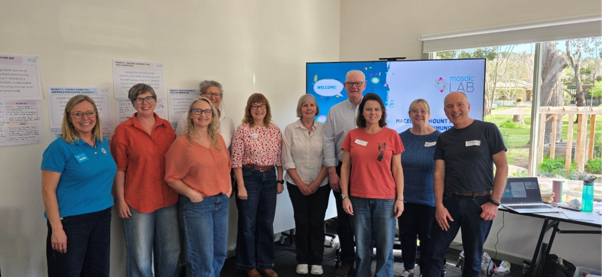
Process: Strategic plan engagement workshop
MosaicLab’s role: Design and facilitation
Participants: Nine people, including committee members, volunteers, program leaders, community members and council representatives
Timeframe: Saturday 19 September 2026
Outputs: Feedback and five key themes to refine the draft 2027 to 2032 Strategic Plan
About the organisation: MMMCH is a volunteer-run incorporated association and registered charity. It’s an accessible and inclusive place where people and community groups connect, learn and look after the community garden.
We designed and facilitated a five-hour workshop at the House, where participants:
heard the thinking behind the draft plan
tested its purpose, vision, mission and values at four discussion stations
rotated in small groups through the four strategic priorities, looking at strengths, weaknesses, opportunities and threats for each
reviewed the draft actions and suggested new ones.
Five themes came through strongly across the day:
MMMCH’s role as an enabler or driver of community activity
community resilience and emergency preparedness
communication and awareness
the capacity of volunteers and the Committee
long-term financial sustainability.
“…the committee can start to look into the future and take on board all the groups that have become involved, how they are using the house, and that’s going to help shape how they look to the future.”
“I really appreciated the openness of the process and the fact that the committee of management were really willing to hear from all the different perspectives from the community and to adjust and respond to our needs.”
Participants discussed a difficult trade-off for the Committee. People wanted the House to take a more active role, while recognising that the volunteers who run it are already stretched.
The Committee has since worked through the feedback and published an updated draft plan that keeps the four strategic priorities but focuses the actions on what’s realistic in the first year.
Community comments on the draft are open until Tuesday 1 December 2026. Read the updated draft strategic plan and find out how to comment

Belonging on campus in Canberra
University of Canberra (centre for deliberative democracy)
Universities are changing. Students learn in different ways and places, and staff and students move between physical, digital, global and social spaces.
At the same time, questions about freedom of expression, safety and trust in information are becoming more prominent.
The University of Canberra wanted to understand what helps people feel recognised, respected and able to contribute, and invited us to help.
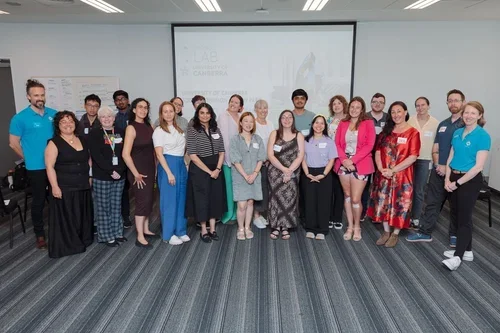
Process: Deliberative panel (the University Voice Panel)
MosaicLab’s role: Co-design, process design and facilitation
Participants: 23 panel members, including students, academic and professional staff and partner organisations
Timeframe: March to April 2026
Outputs: A shared statement of what social cohesion means at the University, and four recommendations covering 15 actions
“Bringing students, partners and staff together to develop recommendations for our university’s Social Cohesion Action Plan was complex but really meaningful work. MosaicLab handled it with the skill, care and commitment that made a real difference. I am genuinely appreciative of the support they have given us.”
Working with the University’s Centre for Deliberative Democracy, we co-designed and facilitated a deliberative panel to inform the University’s Social Cohesion Action Plan.
A deliberative panel brings together a group of people who reflect the wider community to learn, weigh up trade-offs and reach shared recommendations.
The panel responded to this question: How can the University of Canberra become a place where everyone feels they belong, can express who they are, and connect safely across difference?
The panel met four times: a meet and greet, then three panel sessions.
Across 17 hours of deliberation, panel members:
heard from seven expert speakers
drew on findings from wider engagement with clubs, societies, faculties and residents, including a survey of 225 students, staff and community members
explored three themes: identity and belonging; safety and freedom of expression; and cohesion across physical, digital, global and social spaces.
“I enjoyed the process and valued spending time with others in the uni community. I respected the intentions and the work of the Centre for Deliberative Democracy and was pleasantly surprised (and deeply appreciative) by the facilitation by MosaicLab”
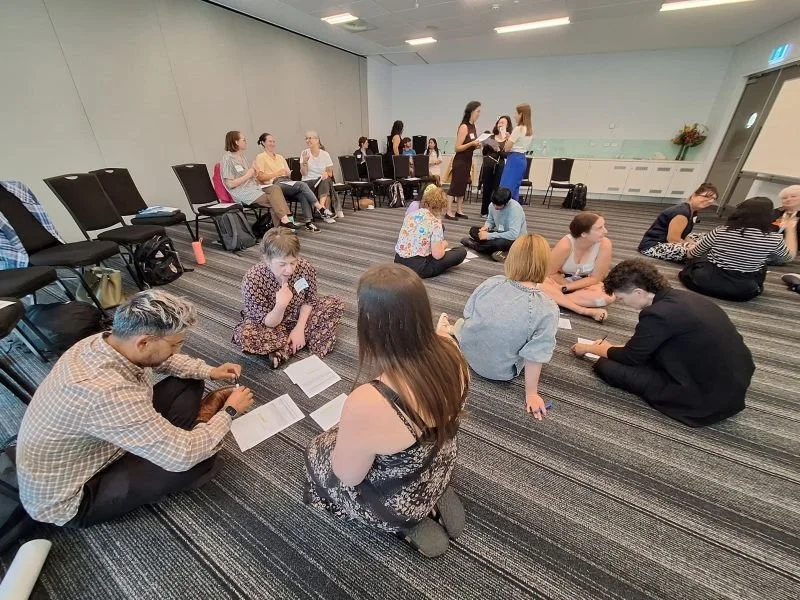
The panel developed a shared statement of what social cohesion means at the University, along with four recommendations covering 15 actions. These were handed to the University’s Deputy Vice-Chancellor.
Panel members said they had rarely had the chance to engage with such a broad cross-section of the University community. They also reflected that the process was itself a working example of social cohesion.
The University’s Social Cohesion Action Plan has since been endorsed by the Vice-Chancellor and University Executive and is now being implemented. The University has also committed to reporting back to the panel on how their advice was used.
Read more about the University Voice Panel on the Centre for Deliberative Democracy website

what big issue or challenge are you facing?
Is your organisation tackling a tough issue or working towards a better future? Consider our criteria for projects and apply for support through ML Giving in 2027.


stay in the know + get lots of free engagement stuff
We share the tips, ideas, news , free resources and more through our monthly e-newsletter the Discussion.
